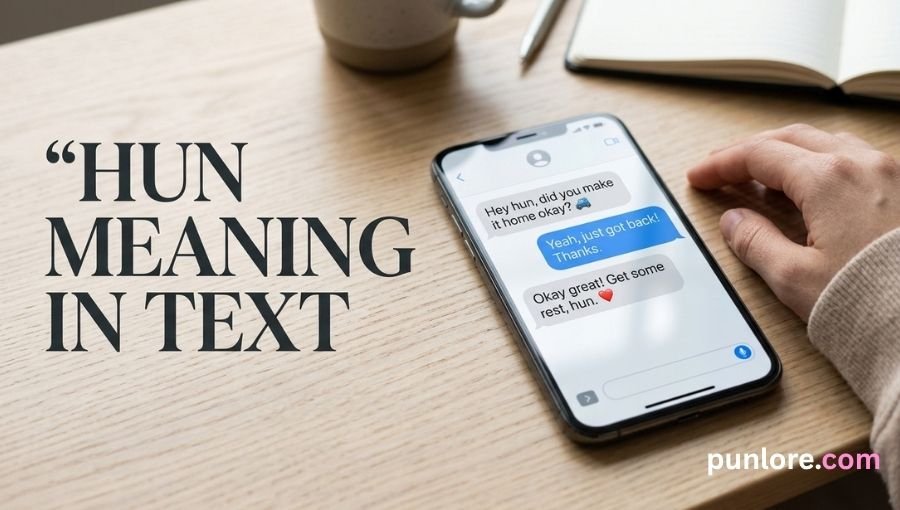
Hun Meaning in Text: Definition, Context, Examples, and Modern Usage (2026 Guide)
You get a message from a friend that simply says, “Thanks, hun!” At first, it seems obvious: they’re being friendly. But then you wonder whether “hun” is affectionate, romantic, sarcastic, or just casual slang. That small word can feel surprisingly unclear when you see it in a text. Understanding Hun Meaning in Text depends heavily on who sent it, what they said before it, and the relationship between you.
The same word can sound warm from a close friend but overly familiar from a stranger.
People are also searching for this expression because texting and social media have made short forms of affection common. Words such as “hun,” “hon,” “honey,” and “babe” can now appear in everything from private messages to public comments.
The good news is that “hun” usually isn’t complicated. Once you understand its common uses and the tone surrounding it, you can read the message much more accurately.
Quick Answer / Quick Definition of “Hun Meaning in Text”
Hun is usually a shortened form of “honey” or “hon,” used as a friendly, affectionate, or familiar form of address. In texts, it can express warmth, friendliness, reassurance, or casual closeness. Its exact meaning depends on the sender, relationship, and surrounding conversation.
Detailed Meaning Breakdown
Primary Meaning
The most common Hun Meaning in Text is simply “honey” used as a term of affection.
For example:
“Don’t worry, hun. Everything will be okay.”
Here, “hun” makes the message sound softer and more caring. It doesn’t necessarily mean romantic love. Friends, relatives, partners, and even some acquaintances may use it.
In everyday American English, “hun” can function much like “hon.” It often appears at the beginning or end of a sentence.
“Hun, did you remember your keys?”
“Thanks for helping me, hun.”
The relationship matters more than the spelling.
Secondary Meanings
Sometimes “hun” signals friendliness rather than deep affection. A person might use it with someone they barely know because it is part of their normal speaking style.
It can also make advice feel gentler:
“Hun, I think you should get some rest.”
In this case, the speaker probably isn’t making a romantic statement. They’re simply trying to sound caring.
Another use is emotional reassurance. Someone may add “hun” when comforting a person who is upset, worried, or embarrassed.
Rare or Misinterpreted Meanings
Not every “hun” is affectionate. In certain conversations, it can sound patronizing, dismissive, or sarcastic.
Consider:
“Sure, hun. Whatever you say.”
The surrounding words change everything. The same abbreviation that sounds sweet in one message can sound irritated in another.
A useful rule is to read the whole message, not the single word.
What “Hun Meaning in Text” Means in Different Contexts
In Texting and Messaging
In ordinary texting, “hun” usually creates a warm, informal tone. It can replace “honey,” “hon,” “dear,” or another familiar term.
For example:
“Are you home yet, hun?”
This could come from a partner, friend, parent, or close acquaintance.
Texting also removes vocal clues. You can’t hear whether the sender sounds playful or serious. That’s why context becomes especially important.
A personal observation worth remembering: when someone adds “hun” to an otherwise practical message, it often makes the request feel less blunt.
On Social Media Platforms
On Instagram, “hun” may appear in comments such as:
“You look amazing, hun!”
On Snapchat, it can appear in quick replies between friends:
“Lol hun you missed everything 😂”
TikTok comments may use it casually when addressing another creator or commenter:
“Hun, that outfit is everything.”
Threads can have a similar conversational feel, especially in replies.
There isn’t a universal platform-specific definition. The platform changes the social setting more than the basic meaning. Public comments often make “hun” feel more casual, while DMs can make it more personal.
In Dating and Relationships
In romantic conversations, “hun” can be a genuine pet name.
“Goodnight, hun ❤️”
A partner may use it because it feels natural and affectionate. However, the word itself doesn’t prove romantic interest.
Someone you’re dating might use “hun” frequently, while a friend might use exactly the same word. Look at the broader relationship, not the abbreviation alone.
In Professional Communication
Using “hun” at work is more complicated.
A close coworker might say:
“Hun, can you send me that file?”
But a manager, client, recruiter, or new colleague may interpret the same wording as overly familiar.
In professional communication, neutral language is usually safer. “Thanks,” “Hi,” or the person’s name can communicate warmth without creating uncertainty.
Cultural or Regional Differences
The word can feel more natural in some communities, families, and regions than others. Age can matter, too.
One person may use “hun” with almost everyone. Another may reserve it for a romantic partner.
That difference explains why two people can interpret the same text completely differently. Personal speech habits are often stronger clues than the word itself.
Tone, Psychology & Why People Use It
Why People Use It & What It Signals Socially
People often choose “hun” because it makes communication feel less formal and more personal.
It can signal familiarity, friendliness, affection, reassurance, or emotional support.
For example:
“You’ve got this, hun.”
The sender is probably trying to encourage you, not communicate a hidden romantic message.
Short terms of affection also help soften difficult statements. Compare “You need to calm down” with “Hun, take a breath.” The second feels considerably gentler.
Emotional Layer Behind It
Tone can range from very warm to slightly cold.
Friendly: “Thanks, hun! You’re the best.”
Neutral: “Hun, did you leave your charger here?”
Romantic: “Miss you, hun.”
Cold or sarcastic: “Okay, hun.”
Punctuation matters, too. An exclamation mark can add enthusiasm, while a short “Okay, hun.” may feel dismissive in an argument.
10 Real Conversation Examples (Explained)
1. “Thanks, hun!”
Meaning: The sender is expressing appreciation.
Tone: Warm and friendly.
Likely interpretation: Usually casual affection, not necessarily romance.
2. “Good morning, hun ❤️”
Meaning: A warm greeting with an affectionate tone.
Tone: Romantic or deeply personal.
Likely interpretation: More intimate when sent by a partner or dating interest.
3. “Hun, can you call me?”
Meaning: The sender wants your attention.
Tone: Familiar and conversational.
Likely interpretation: The relationship determines whether it feels friendly or romantic.
4. “Don’t stress, hun.”
Meaning: The person is trying to reassure you.
Tone: Caring and supportive.
Likely interpretation: Emotional comfort is the main purpose.
5. “Okay, hun.”
Meaning: Literally, agreement or acknowledgment.
Tone: Could be neutral, affectionate, or sarcastic.
Likely interpretation: Previous messages are essential for understanding it.
6. “You look gorgeous, hun!”
Meaning: A compliment.
Tone: Enthusiastic and friendly.
Likely interpretation: Common in social media comments and among friends.
7. “Hun, I told you yesterday.”
Meaning: The sender is reminding you of something.
Tone: Potentially irritated.
Likely interpretation: “Hun” softens the sentence, but the frustration remains.
8. “Take care, hun.”
Meaning: A warm goodbye or expression of concern.
Tone: Gentle and caring.
Likely interpretation: Usually affectionate without automatically being romantic.
9. “Sure, hun 🙄”
Meaning: The sender agrees, but the emoji changes the mood.
Tone: Playful, annoyed, or sarcastic.
Likely interpretation: The emoji and previous conversation provide the real clue.
10. “Thank you, hun. I really needed that.”
Meaning: Genuine gratitude for emotional or practical support.
Tone: Sincere and appreciative.
Likely interpretation: The sender likely feels comfortable and emotionally close to you.
Where Misunderstandings Happen
Context Confusion
The biggest problem is assuming one fixed definition. A word such as “hun” doesn’t carry the entire emotional meaning by itself.
Look at the conversation before and after it, plus the sender’s normal communication style.
Generational Gap
Older and younger speakers may use affectionate language differently. One person might consider “hun” completely ordinary, while another may interpret it as flirtatious.
Age doesn’t determine meaning, but it can influence expectations.
Platform Differences
A public TikTok comment isn’t necessarily as intimate as a private Instagram DM. Likewise, a casual Snapchat message may have a different emotional weight from a carefully written text.
The communication channel provides useful context.
Similar Words, Symbols, or Abbreviations
| Term | Meaning | How It Differs from Hun Meaning in Text |
|---|---|---|
| Hon | Short form of honey | Very close in meaning and often interchangeable |
| Honey | Term of affection | Usually more fully expressed and slightly warmer |
| Babe | Affectionate nickname | More commonly romantic |
| Dear | Term showing warmth or politeness | Can sound more formal or traditional |
| Sweetie | Affectionate name | Often sounds especially caring |
| Hunny | Playful spelling of honey | More stylized and sometimes deliberately cute |
| Bae | Slang for romantic partner | More strongly associated with romance |
| X | Kissing/affection symbol | Conveys affection without being a word |
| Bestie | Close-friend nickname | Usually signals friendship rather than romance |
When Not to Use “Hun Meaning in Text”
Professional Risks
Avoid “hun” when messaging a new client, senior executive, interviewer, customer, or unfamiliar business contact. Even when you mean well, the term may sound too personal.
Professional warmth doesn’t require pet names.
Cultural Risks
Don’t assume everyone interprets affectionate language in the same way. Some people enjoy casual nicknames; others strongly dislike them.
If you don’t know the person’s communication preferences, choose a neutral greeting.
Tone Risks
Avoid using “hun” during serious disagreements unless you know the other person responds well to it. It can accidentally sound patronizing.
The phrase “Listen, hun” is a good example. Depending on the situation, it may sound supportive—or condescending.
Expert Tips for Using “Hun Meaning in Text” Correctly
- Consider the relationship first. Close friends and partners are more likely to welcome it.
- Read the entire conversation. Context often determines the emotional meaning.
- Match the other person’s style. If they never use pet names, don’t force one into the conversation.
- Don’t assume romance. “Hun” can be completely platonic.
- Watch punctuation and emojis. They can dramatically change the tone.
- Use caution at work. Professional messages generally benefit from neutral wording.
- Notice repetition. Someone who calls everyone “hun” probably isn’t signaling special affection.
- Pay attention to conflict. A familiar nickname can become sarcastic during an argument.
- Ask when genuinely uncertain. A simple “What did you mean by hun?” can clear up confusion.
- Let the relationship guide you. The sender’s behavior matters more than dictionary definitions.
Frequently Asked Questions
1. What does “hun” mean in a text?
In most conversations, “hun” is a shortened form of “honey” or “hon.” It can communicate friendliness, affection, reassurance, or familiarity. The word isn’t automatically romantic. A close friend, family member, partner, coworker, or even stranger may use it depending on their personal communication style.
2. Is “hun” a positive or negative word?
Usually, “hun” has a positive or friendly tone. However, context can make it sound sarcastic, dismissive, or patronizing. For example, “Thanks, hun!” is likely warm, while “Sure, hun” during an argument may carry irritation. The surrounding words and relationship provide the strongest clues.
3. Can “hun” be romantic?
Yes. Romantic partners commonly use “hun” as a pet name. Still, the word alone isn’t proof that someone is flirting or interested romantically. If a person also gives you romantic compliments, expresses affection, or treats you differently from ordinary friends, the broader pattern provides stronger evidence.
4. Is “hun” the same as “honey”?
They’re closely related. “Hun” is generally a shortened or casual version of “honey” or “hon.” It tends to feel quicker and more conversational in digital messages. “Honey” can sound slightly more affectionate, although individual speaking habits mean there is no universal difference.
5. Why would a friend call me “hun”?
A friend may use “hun” simply because it is part of their normal vocabulary. They could be expressing warmth, reassurance, or familiarity without any romantic intention. If that friend uses similar nicknames with many people, the term is probably a general habit rather than a special signal.
6. How should I respond when someone says “hun”?
Match the level of familiarity you’re comfortable with. If you like the friendly tone, you can respond naturally with “Thanks!” or use a similar nickname. If you’re unsure, a neutral response works perfectly. You don’t need to use “hun” yourself just because someone else used it.
7. Does “hun” mean someone is flirting?
Not necessarily. Flirting is usually communicated through a combination of behavior, wording, attention, and context rather than one nickname. Someone who calls everyone “hun” probably isn’t flirting simply by using it. Look for additional romantic signals before drawing that conclusion.
8. Is “hun” appropriate at work?
It depends on the relationship and workplace culture, but it can be risky. Some colleagues use affectionate language casually, while others may find it too familiar. For clients, managers, recruiters, and new professional contacts, it’s generally better to use the person’s name or a neutral greeting.
Final Summary & Smart Usage Advice
The simplest way to understand Hun Meaning in Text is to think of “hun” as a casual form of “honey” or “hon.” Most of the time, it adds friendliness, affection, reassurance, or familiarity to a message.
But there isn’t one universal interpretation. A partner might use “hun” as a romantic pet name. A friend might use it as a casual nickname. A stranger could use it as part of their everyday speaking style. During an argument, the same word might even sound sarcastic.
The safest approach is to consider who sent it, what they said around it, how they normally communicate, and what kind of relationship you have.
For personal conversations, “hun” can sound warm and natural when both people are comfortable with informal language. In professional situations, however, neutral wording is usually the smarter choice.
Don’t overanalyze the word by itself. One nickname rarely tells the whole story.
The memorable rule: “Hun” usually signals familiarity, but context tells you what kind of familiarity it is.
Also Read This: HYDD Meaning



Pingback: Banger Meaning: Definition, Slang & Examples 2026
Pingback: Smart WYD Responses and Meaning: 2026 Guide