What Does FIP Mean in Plumbing? (Simple Beginner Guide 2026)
Begin with an engaging introduction explaining why what does fip mean in plumbing is trending and why people are searching for its meaning.
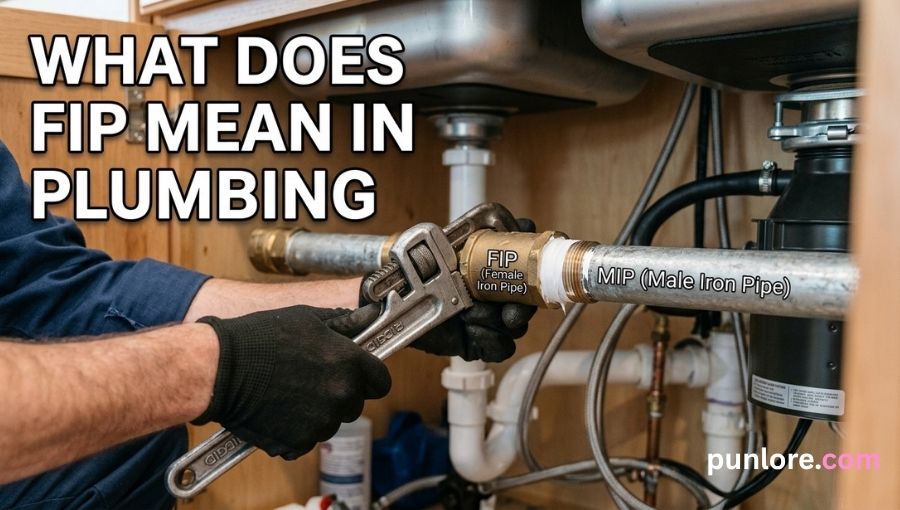
If you are searching for what does fip mean in plumbing, you are not alone because this plumbing term is often seen on pipes, valves, and fittings but confuses many beginners. In plumbing, FIP means “Female Iron Pipe,” which refers to a type of threaded fitting with internal threads used to connect securely with male pipe fittings and prevent leaks.
Clearly define what does fip mean in plumbing within the first 100 words (featured-snippet ready).
⚡ Quick Answer: What Does FIP Mean in Plumbing?
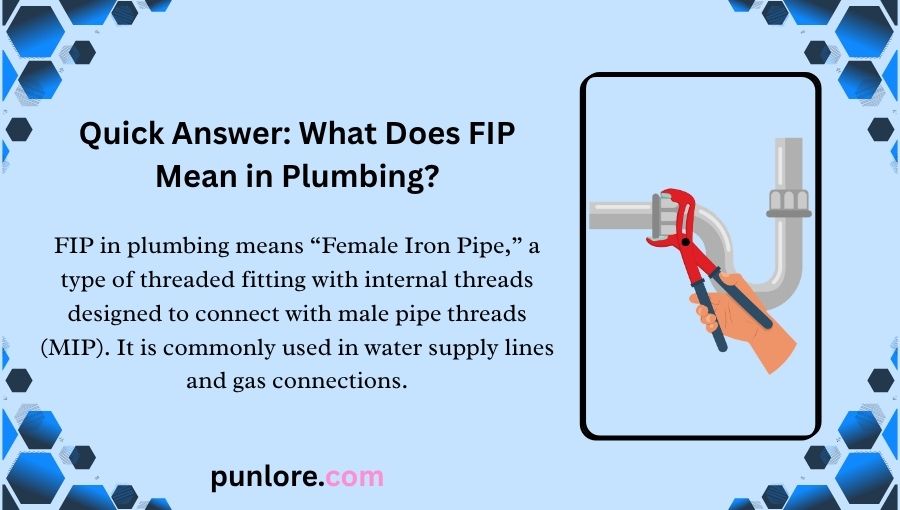
FIP in plumbing means “Female Iron Pipe,” a type of threaded fitting with internal threads designed to connect with male pipe threads (MIP). It is commonly used in water supply lines and gas connections.
📚 Meaning of FIP in Plumbing (Full Explanation)
🔧 What Does FIP Stand For?
FIP = Female Iron Pipe
It refers to a fitting that has internal threads. These threads allow it to connect with a male-threaded pipe, commonly known as MIP (Male Iron Pipe).
👉 Simple breakdown:
- FIP = Female (inside threads)
- MIP = Male (outside threads)
When combined, they create a tight, leak-resistant seal.
🏠 In Plumbing Systems
In plumbing systems, FIP fittings are extremely common and used in:
- Water supply lines 🚰
- Gas line connections 🔥
- Faucets and shower installations 🚿
- Valves and adapters
They are designed for durability and secure sealing under pressure.
🔗 How FIP Works
A FIP fitting screws onto a male-threaded pipe (MIP).
Example:
- A water valve with FIP threads will screw onto a pipe with MIP threads.
- The connection is sealed using thread tape (Teflon tape) or pipe joint compound.
👉 This prevents leaks and ensures strong connection.
🧰 Common Uses of FIP in Plumbing
FIP fittings are used in many household and industrial plumbing setups:
- Sink water supply lines
- Toilet fill valves
- Water heaters
- Outdoor hose connections
- Gas appliances
📊 FIP vs MIP (Simple Table)
| Term | Meaning | Thread Type | Connects To |
|---|---|---|---|
| FIP | Female Iron Pipe | Internal threads | MIP |
| MIP | Male Iron Pipe | External threads | FIP |
🧠 Examples of FIP Usage in Real Life
Here are simple examples to understand how FIP is used in real situations:
🧾 Example 1:
“I bought a FIP elbow fitting to connect my kitchen sink pipe.”
🧾 Example 2:
“The water heater has a FIP inlet connection for easy installation.”
🧾 Example 3:
“Make sure the valve is FIP threaded before connecting the pipe.”
⚠️ Why FIP Matters in Plumbing
Understanding FIP is important because:
- It ensures correct pipe fitting selection
- Prevents leaks and damage
- Helps avoid installation mistakes
- Saves time during repairs
❓ Frequently Asked Questions (FAQ)
What does FIP really mean in plumbing?
FIP means Female Iron Pipe, referring to a fitting with internal threads used to connect to male-threaded pipes.
Is FIP the same as NPT?
FIP often uses NPT (National Pipe Thread) standard, but FIP describes the type of fitting, while NPT refers to the thread standard.
Is FIP positive or negative?
It is neither—FIP is not slang or emotional, it is a technical plumbing term.
How do I connect FIP fittings?
You connect FIP by screwing it onto a male-threaded pipe (MIP) using thread seal tape for a leak-proof fit.
Where is FIP most commonly used?
It is widely used in home plumbing systems, water lines, and gas connections.
🏁 Conclusion
In simple words, FIP in plumbing means Female Iron Pipe, a type of fitting with internal threads used to connect with male-threaded pipes. It plays a key role in creating secure, leak-free plumbing connections in homes and industries.
Now that you understand what FIP means, reading plumbing labels and choosing fittings will be much easier and more confident.
Also Read This: What Does EM Heat Mean