Hannya Mask Meaning: Symbolism, Origin, and Cultural Significance Explained
The Hannya mask meaning has become widely searched because of its strong presence in tattoos, fashion, social media, and Japanese culture. Many people see this striking demon-like face and wonder what it truly represents.
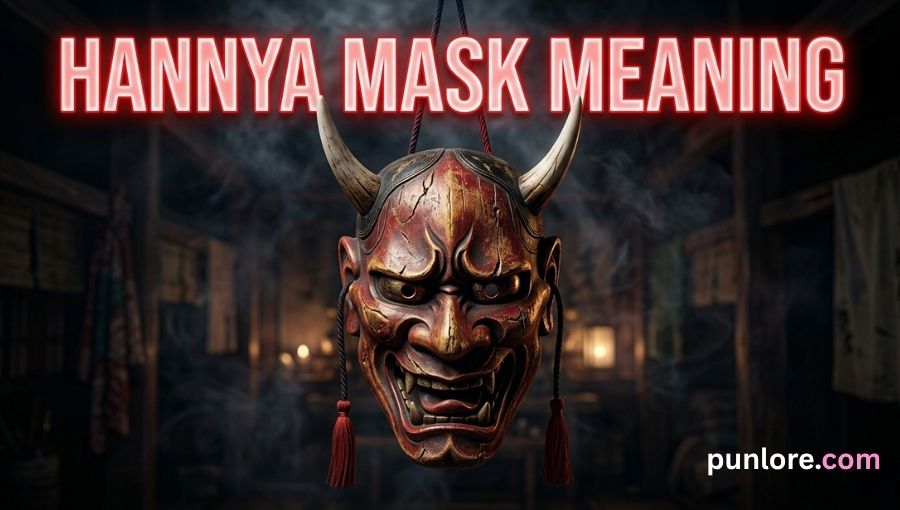
A Hannya mask is a traditional Japanese Noh theater mask that represents a jealous, angry, and tormented female spirit who has transformed into a demon due to intense emotions like jealousy and heartbreak. It is both terrifying and deeply emotional, which is why it continues to trend worldwide.
⚡ Quick Answer: Hannya Mask Meaning in Simple Words
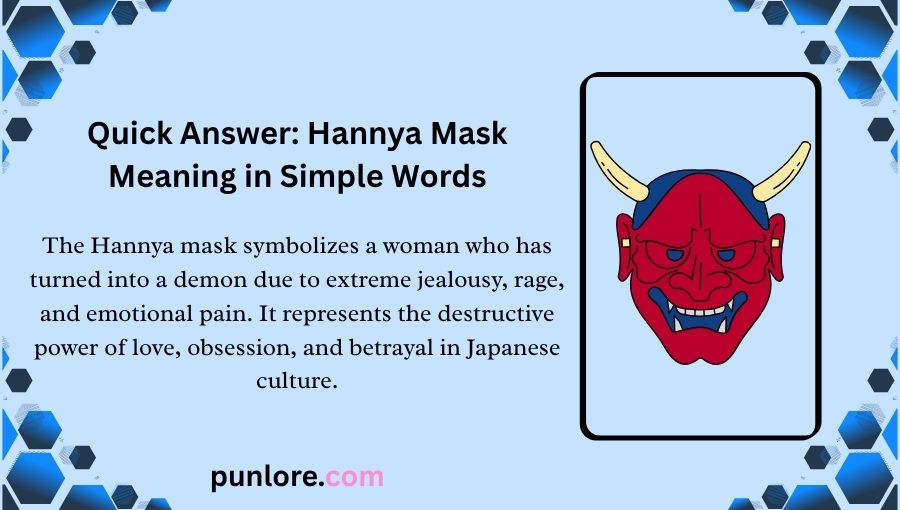
The Hannya mask symbolizes a woman who has turned into a demon due to extreme jealousy, rage, and emotional pain. It represents the destructive power of love, obsession, and betrayal in Japanese culture.
🏮 What Is a Hannya Mask?
The Hannya mask comes from Japanese Noh theater, one of the oldest traditional performing arts in Japan. It is used to portray a female character consumed by jealousy and anger, who transforms into a demon.
The mask is known for:
- Sharp horns
- Metallic eyes
- A terrifying expression
- A mix of human and demon features
👉 The entity often associated with this is: Hannya mask
💬 Hannya Mask Meaning in Texting and Messaging
In modern digital communication, the Hannya mask meaning has evolved.
People use it to represent:
- Extreme anger 😡
- Emotional pain 💔
- Feeling betrayed
- “Demonic mood” or dark humor
Example texts:
- “I’m in my Hannya mask era today 😤”
- “Don’t talk to me… Hannya mask mode activated.”
- “That betrayal gave me full Hannya energy.”
❤️ Hannya Mask Meaning in Love and Relationships
In relationships, the Hannya mask symbolizes toxic emotions caused by love, such as:
- Jealousy in relationships
- Deep heartbreak
- Obsession with a partner
- Emotional betrayal
It represents how love can turn painful when trust is broken.
👉 It is not romantic in a soft way—it is more about dark, intense emotional love.
🔥 Hannya Mask in Slang and Casual Language
On social media and casual talk, “Hannya mask” is used as slang for:
- Being extremely angry
- Overthinking or jealousy mode
- Emotional breakdown
- “Villain arc” energy
Example:
- “She saw his message and went full Hannya mask 😭”
📱 Meaning on Social Media (TikTok, Instagram, Snapchat)
On platforms like TikTok and Instagram, the Hannya mask is trending as:
- Aesthetic tattoo inspiration
- Dark emotional edits
- “Villain era” transformation posts
- Japanese aesthetic culture content
People often use it in captions like:
- “Healing is messy… Hannya mask energy.”
- “From soft to savage 💀 Hannya mode.”
🧘 Spiritual and Symbolic Meaning
Spiritually, the Hannya mask represents:
- The danger of uncontrolled emotions
- Transformation through pain
- Inner demons and emotional struggle
- The duality of human nature (love vs rage)
It reminds people that emotions like jealousy and anger can destroy peace if not controlled.
🎎 Cultural Meaning of Hannya Mask
In Japanese culture, the mask is not just scary—it is symbolic storytelling.
It represents:
- A woman suffering emotional betrayal
- Transformation into a demon due to intense feelings
- A warning about destructive emotions
It is commonly used in traditional performances to teach moral lessons.
🧠 Examples & Real-Life Usage
Example 1:
- “After the breakup, she posted a Hannya mask tattoo design.”
Example 2:
- “He turned full Hannya mask when he saw the truth.”
Example 3:
- “This song gives Hannya mask vibes 💀”
Context changes meaning:
- In culture → emotional demon symbol
- In slang → anger or emotional intensity
- In tattoos → strength, pain, transformation
❓ FAQs About Hannya Mask Meaning
What does the Hannya mask really mean?
It represents a woman transformed into a demon due to jealousy, heartbreak, and emotional suffering.
Is the Hannya mask positive or negative?
It is both:
- Negative: jealousy, rage, pain
- Positive: emotional strength, transformation, awareness
Is the Hannya mask romantic?
Not directly. It relates to love, but mainly in a painful and obsessive emotional context.
How should someone reply to “Hannya mask” slang?
You can respond casually like:
- “What happened? 😭”
- “Not the Hannya mode again 💀”
- “Stay calm bro”
🏁 Conclusion
The Hannya mask meaning is deeply rooted in Japanese culture, symbolizing jealousy, heartbreak, and emotional transformation into a demon-like state. Over time, it has also become popular in modern slang, tattoos, and social media trends.
Now you clearly understand that the Hannya mask is not just a scary face—it is a powerful symbol of human emotion, especially the darker side of love and jealousy.
Also Read This: BSM Toyota Meaning